

Akwa Ibom Government Imposes Statewide Ban on Three Students Accused of Attacking Teachers
The Akwa Ibom State Ministry of Education has taken a controversial step by banning three students from all public and private schools following allegations of violence against teachers. The lack of disclosed evidence or legal rationale for the ban raises concerns over transparency and due process.
The Abuja Times

The Akwa Ibom State Ministry of Education has enacted a statewide ban on three students implicated in alleged attacks on teachers, a decision that has sparked discussions regarding its implications for justice and educational governance. The government’s action, which affects both public and private schools, has raised eyebrows due to the absence of detailed evidence or the legal basis for the imposed sanctions.
While the ministry’s swift response aims to safeguard educators and maintain discipline within schools, critics have voiced concerns about the fairness of the ban. The lack of transparency surrounding the investigation and the specific allegations against the students has led to questions about due process and the rights of the accused. In educational settings, where formative experiences are crucial, punitive measures without clear justification could undermine the trust between students and educational authorities.
In a statement, the ministry emphasized its commitment to creating a safe learning environment, asserting that any form of violence against teachers would not be tolerated. However, stakeholders in the education sector are calling for a more thorough disclosure of the circumstances leading to such drastic measures, advocating for a balanced approach that considers both accountability and the rights of students.
“It is essential that any disciplinary actions taken by the government are supported by evidence and adhere to legal standards to ensure fairness,” remarked a local education advocate. “Without this, we risk creating an environment of fear rather than one of learning.”
This situation in Akwa Ibom highlights a broader challenge within Nigeria’s educational landscape, where instances of violence against educators have been reported, but responses often lack clarity and comprehensive frameworks for addressing such issues. As the state navigates this contentious issue, the call for transparency and due consideration of all parties involved remains paramount.
Share this article with your network
Broadcast directly to WhatsApp communities and news circles.
The Abuja Morning Dispatch
Get the capital's most important political investigations, cabinet decisions, and economic intelligence delivered to your inbox every morning.
About The Abuja Times
Super Admin & Lead Director
Related Dispatches in News

National Assembly Embarks on Digital Transformation of Legislative Records
The National Assembly Library Trust Fund is set to revolutionize access to parliamentary information by developing electronic repositories and a mobile application while translating laws into local languages. This initiative aims to enhance the preservation of legislative records and ensure that all Nigerians can engage with their laws more effectively.

Obi Promises Reinstatement of Fuel Subsidy after Tackling Corruption
Peter Obi, the presidential candidate of the Nigeria Democratic Congress, has vowed to reinstate the petroleum subsidy if elected in 2027, emphasizing a strong focus on eradicating corruption first. Speaking at a town hall meeting in Sokoto, Obi delineated his administration's commitment to addressing Nigeria's systemic corruption as a precursor to restoring the subsidy.
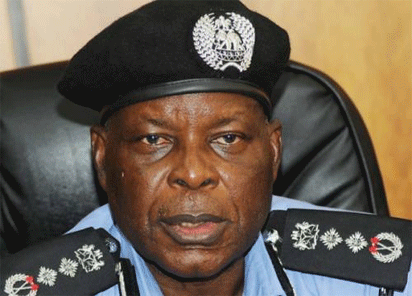
The Decline of Community Policing: Lagos' Abandoned Police Information Boxes
Years after their introduction, the police information boxes initiated by former Lagos CP Mike Okiro have fallen into disrepair, illustrating a concerning trend of neglect in community policing efforts. Once a vital tool for fostering citizen engagement and intelligence gathering, these structures now languish in decay, symbolizing the erosion of trust between residents and law enforcement.