

Dangerous Developments: The Perils of Building Under High-Voltage Power Lines in Lagos
A recent investigation reveals alarming contradictions in government policies as new commercial developments sprout beneath high-voltage power lines, raising serious safety concerns for residents and businesses alike. The case of Clementine Schools highlights a troubling trend of planning failures that jeopardize lives and investments in Lagos.
The Abuja Times
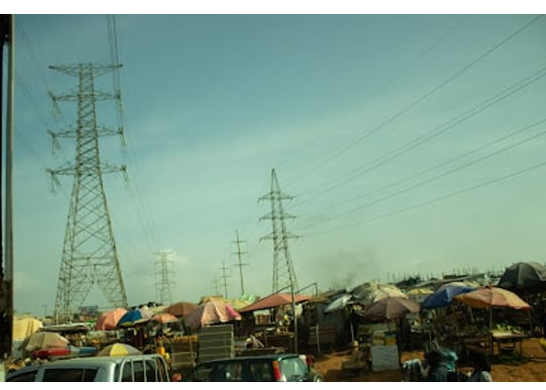
For over two decades, the pupils of Clementine Schools in Agbado Oke, Lagos, attended classes under the looming presence of twin high-voltage electricity transmission lines. This precarious situation came to a head when the school was demolished under the pretense of safety regulations, only to have shops built on the same land shortly after. The proprietress, Mrs. Clementine Adegoroye, expressed her disbelief, stating, "If government said my school was demolished because it was under the power lines, why are shops now standing there?" This question underscores a glaring inconsistency in government oversight and planning.
According to a report by Sunday Vanguard, the investigation has unveiled a disturbing pattern of conflicting government approvals that not only threaten public safety but also undermine the integrity of existing laws. Despite repeated warnings from federal and state authorities about the dangers associated with residing or conducting business beneath high-voltage lines, new commercial enterprises continue to sprout in these hazardous zones. This contradiction raises questions about the efficacy of regulatory frameworks designed to protect citizens.
Experts warn that the risks associated with living or working in close proximity to high-voltage power lines include serious health concerns, including increased exposure to electromagnetic fields. The presence of new businesses in these areas may not only endanger the lives of employees and customers but also signify a broader failure in urban planning and safety enforcement. As urban centers like Lagos continue to expand, the need for stringent regulations and adherence to safety protocols becomes increasingly crucial.
In light of these findings, community leaders and safety advocates are calling for immediate action to address the discrepancies in urban development policies. They urge government officials to prioritize public safety over commercial interests, emphasizing the need for a comprehensive review of existing structures and the enforcement of regulations that protect vulnerable populations from hazardous environments. The case of Clementine Schools serves as a troubling reminder of the potential consequences of negligence in urban planning.
Share this article with your network
Broadcast directly to WhatsApp communities and news circles.
The Abuja Morning Dispatch
Get the capital's most important political investigations, cabinet decisions, and economic intelligence delivered to your inbox every morning.
About The Abuja Times
Super Admin & Lead Director
Related Dispatches in News

Political Loyalties in Flux: The Shift from Atiku to Tinubu's Camp
Recent developments in Nigerian politics highlight the fluidity of political allegiances, as former spokesmen for Atiku Abubakar transition to support President Bola Tinubu's re-election campaign. This shift raises questions about the nature of political loyalty and public perception in an ever-evolving political landscape.

Ebola Resurfaces: Nigeria Faces New Challenge a Decade After 2014 Triumph
As Nigeria marks a significant anniversary in its public health history, the confirmation of a new Ebola case in Abuja raises urgent questions about the nation's preparedness. The recent incident serves as a critical test of the lessons learned from the 2014 outbreak that was successfully contained.

Kwankwaso Vows to Prioritize Jobs and Security in 2027 Election Campaign Amidst Obi's Absence
Rabiu Kwankwaso has outlined key focus areas for his envisioned Nigeria Democratic Congress (NDC) government, emphasizing the importance of security, education, and agricultural development. This pledge comes as fellow presidential hopeful Peter Obi misses an important meeting in Plateau State.