

Nigeria's Shortlet Problem Isn't Finding a Property. It's Knowing What You're Actually Booking
As Nigeria's shortlet and furnished-apartment market expands, the bigger challenge is no longer access to properties but confidence in what is being advertised. Apaté is building a verification-first model designed to close that gap.
The Abuja Times
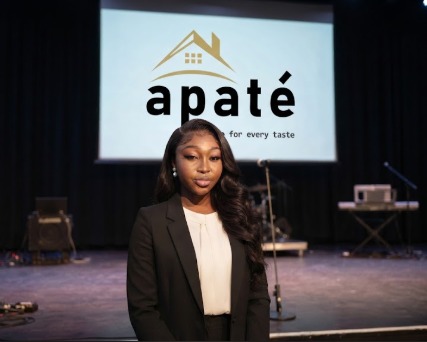
For many Nigerians, booking a shortlet begins with a familiar routine.
Open Instagram. Search for an apartment. Scroll through photographs. Check the price. Ask a few questions on WhatsApp. Transfer the money.
The process can take minutes.
The uncertainty can last much longer.
Is the apartment actually where the listing says it is? Are the photographs recent? Does "24/7 power" really mean electricity is available around the clock? Is there reliable water? Is the neighbourhood secure? Does the property still look the way it did online? And, perhaps most importantly, what happens if the guest arrives and discovers that what was advertised is materially different from what is available?
These questions expose a deeper problem in Nigeria's growing shortlet market.
Finding a property is becoming easier. Knowing what you are actually booking is the harder part.
That distinction is at the centre of the model being built by Apaté, a Nigerian accommodation and space marketplace that places physical property inspection, transparent information and secure booking at the heart of its proposition.
Apaté's current platform describes itself as a trust-first accommodation and space marketplace. Its listings span apartments, hotels, event spaces and other accommodation options, with physical inspection presented as a core part of its verification process.
The company's Head of Operations, Mrs. Tolani Kumuji, argues that the accommodation industry needs to move beyond simply putting properties online.
"The biggest problem is that finding a property is not necessarily the same thing as knowing what you are booking," she explains in responses provided for this article.
That may be one of the most important distinctions in Nigeria's evolving shortlet economy.
The information gap behind the booking
Nigeria's furnished-apartment and shortlet market has grown around a simple promise: convenience.
A traveller no longer necessarily needs to book a conventional hotel. A family visiting another city can find a furnished apartment. A professional travelling for work can find a serviced space. Someone attending an event can book accommodation close to the venue. People relocating can temporarily live in furnished apartments while making longer-term arrangements.
The marketplace has become increasingly digital.
But digitisation creates its own problem when the product being sold is physical.
An apartment cannot be experienced through a photograph.
A photograph can show a living room. It cannot independently establish the current condition of the building.
A listing can say "Wi-Fi". It cannot, by itself, tell the guest whether the connection is reliable enough for a remote worker.
A host can write "24/7 power". The words alone do not explain whether the property relies on public electricity, a generator, an inverter or another backup arrangement.
And a beautiful photograph says very little about what happens when something goes wrong.
According to Kumuji, this is why Apaté's approach starts with verification rather than simply collecting listings.
"Our approach is therefore built around verification, physical inspection, transparency and secure booking," she says.
The principle is straightforward: the guest should not have to become a private investigator just to book an apartment.
What does "physically inspected" actually mean?
The word "verified" has become increasingly common across digital marketplaces.
But verification is only meaningful if consumers understand what sits behind the label.
For Apaté, physical inspection is intended to create a layer between the property owner and the guest.
Instead of relying exclusively on photographs submitted by a host, the Apaté team physically visits the property and assesses the accommodation before it is presented as an Apaté-verified property.
That inspection considers practical elements that can directly affect the guest's experience.
These include:
The actual apartment and room configuration
General property condition
Electricity and backup arrangements
Water availability
Security arrangements
Internet and Wi-Fi
Kitchen and household facilities
Parking, where applicable
Air conditioning
Swimming pools and other advertised facilities
General cleanliness and presentation
Whether the property corresponds with the information submitted
The difference may sound subtle, but it is fundamental.
Uploaded photographs are information supplied by a property. Physical inspection is information independently observed by Apaté.
That is the distinction the company wants its "Apaté Verified" proposition to communicate.
Apaté's live platform currently presents physical inspection as part of its verification proposition and allows users to search and filter properties by practical factors such as location, price, power and security.
In Nigeria, electricity is part of the accommodation decision
There is another reason verification matters particularly in the Nigerian market: the practical meaning of an amenity can be very different from its marketing label.
Consider electricity.
For a traveller from another country, "24/7 power" might be a pleasant convenience.
For a Nigerian guest booking a shortlet for a business trip, family stay or important event, electricity can be a fundamental part of the decision.
The same applies to water, security, internet access and parking.
Kumuji says Apaté therefore treats these details as more than decorative features on a property page.
The platform currently highlights amenities such as 24/7 power, generator backup, gated security, borehole water, Wi-Fi, air conditioning, parking and swimming pools.
The objective is to give guests useful information before payment, rather than forcing them to discover important facts after check-in.
That is an important change in how accommodation marketplaces can think about transparency.
Instead of asking only, "What does this property have?"
The more useful question becomes:
"What does this property actually offer, and what should the guest reasonably expect?"
Verification does not mean perfection
There is an important qualification to Apaté's model.
Physical inspection cannot freeze a property in time.
A generator can develop a fault. An air conditioner can stop working. Management can change. Furniture can be replaced. An amenity can become unavailable. Maintenance issues can emerge after an inspection.
Apaté's own position acknowledges this reality.
The company does not define verification as a guarantee that nothing can ever go wrong. Instead, it sees verification as a way of reducing uncertainty and creating accountability around the booking process.
That distinction makes the proposition more credible.
The goal is not to tell consumers that a property is perfect.
The goal is to give consumers substantially more information and a clearer process for dealing with problems when they occur.
According to Kumuji, that includes establishing what was advertised, establishing what was verified, providing clear booking terms, maintaining communication through the platform, investigating legitimate complaints and applying relevant refund, cancellation or dispute processes where appropriate.
Apaté's terms also provide for property inspection, user verification and dispute mediation in circumstances including fraud, misrepresentation or service failure.
In other words, the platform is attempting to move the transaction away from a simple "send money to a stranger because the pictures look good" model.
The cheapest shortlet may not be the cheapest stay
Price remains one of the strongest factors in accommodation decisions.
But the lowest nightly rate can sometimes hide other costs.
Kumuji argues that guests should think beyond the advertised price and consider electricity, transportation, security, internet, water, cleaning, convenience, location, reliability, refund risk, time lost resolving problems and the quality of the actual accommodation.
That changes the meaning of "value".
An apartment with a lower nightly price may become considerably more expensive if a guest has to spend additional money solving problems that were not anticipated.
The opposite can also be true.
A property with a higher headline price may provide greater value if the guest receives the quality, reliability, security, amenities and transparency expected from the booking.
This is why Apaté says it does not want to compete solely on price.
It wants to compete on the quality of the booking decision.
Trust has to continue after the property goes live
One of the more significant questions for any verified shortlet marketplace is what happens after the initial inspection.
A property changes.
Management changes.
Furniture changes.
Amenities change.
Power arrangements change.
Apaté's operational philosophy therefore treats verification as an ongoing responsibility rather than a certificate that remains permanently valid.
The company's stated model is built around a feedback loop:
Inspect → List → Monitor → Receive feedback → Investigate discrepancies → Update, reverify or remove where necessary.
Its terms also require hosts to renew property pictures every three months, according to the interview responses supplied by Kumuji.
That matters because the value of a verified listing depends partly on the currency of the information.
A guest searching for a premium apartment in Lagos should not have to wonder whether the photographs were taken months or years ago.
The more a marketplace can keep information current, the more useful the verification layer becomes.
What should Nigerians check before booking a shortlet?
Regardless of which platform they use, consumers should ask basic questions before making payment.
Has the property been physically inspected?
Is the advertised location accurate?
What exactly does "24/7 power" mean?
Is there generator or another backup arrangement?
How reliable is the water supply?
What security arrangements are available?
Are the photographs current?
What happens if the accommodation is materially different from the listing?
Who holds the payment?
What are the cancellation and refund terms?
And perhaps the most important question:
Who is accountable if something goes wrong?
These are not unnecessary questions.
They are part of making an informed accommodation decision.
A different model for Nigeria's accommodation marketplace
The Nigerian shortlet market does not necessarily need more photographs, more Instagram pages or more listings.
It needs better information.
It needs stronger verification.
It needs clearer expectations between hosts and guests.
And it needs booking systems that recognise that the transaction does not end when a customer clicks "pay".
That is the space Apaté is attempting to occupy.
Its current marketplace combines physically inspected accommodation with transparent listing information, secure payment, practical amenity filters and a broader selection of apartments, hotels and event spaces.
The company's proposition can therefore be reduced to a simple idea:
The guest should know more before paying.
That may sound straightforward, but in a physical marketplace where digital photographs can sometimes create more confidence than evidence deserves, it represents a meaningful shift.
Nigeria's shortlet industry is not short of properties.
It is short of certainty.
And if accommodation marketplaces are going to mature, the platforms that help close that certainty gap may ultimately become just as important as the properties they list.
For Apaté, that is the opportunity: not merely to help Nigerians find somewhere to stay, but to make the decision to stay there more informed.
A home for every taste should also mean a booking experience built around trust.
Share this article with your network
Broadcast directly to WhatsApp communities and news circles.
The Abuja Morning Dispatch
Get the capital's most important political investigations, cabinet decisions, and economic intelligence delivered to your inbox every morning.
About The Abuja Times
Super Admin & Lead Director
Related Dispatches in Business

Transforming Nigeria's Gas Sector: A Journey of Investment and Infrastructure Development
The Nigerian gas sector has seen a remarkable transformation, with investments exceeding ₦1.6 trillion and the approval of ₦671 billion in Final Investment Decisions (FIDs). This strategic growth has resulted in a robust portfolio of 31 projects, enhancing the country's energy infrastructure significantly.

Navigating Change: Africa's Strategic Response to the New Arctic Shipping Era
As the Northern Sea Route opens up new shipping lanes, African ports face potential sidelining; however, this shift in global trade patterns could also present unique opportunities for the continent. Strengthening maritime and logistics networks will be crucial for Africa to adapt and thrive in this evolving landscape.

Akwa Ibom Advances Towards Establishing Local CNG Supply Hub
The proposed mother station in Akwa Ibom is set to enhance the state's capacity for compressed natural gas (CNG) distribution, promoting wider adoption throughout the region. This initiative aims to streamline supply chains and bolster the use of cleaner energy alternatives in the state.