

Wike's Intervention: A Closer Look at Adeleke's Re-election and Political Allegiances
Minister Nyesom Wike reveals his behind-the-scenes role in ensuring Governor Ademola Adeleke's loyalty to President Bola Tinubu following the Osun State governorship election. This development raises significant questions about the influence of political negotiations on Nigeria's democratic processes.
The Abuja Times
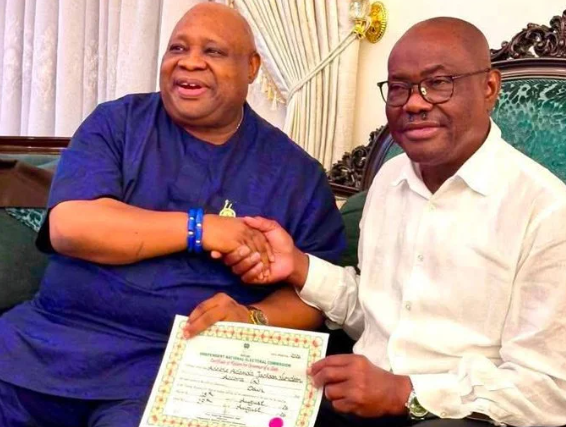
The political landscape in Nigeria is often shaped by intricate alliances and negotiations, particularly following electoral victories. Recent statements from Nyesom Wike, the Minister of the Federal Capital Territory, have brought to light the degree of influence that powerful political figures exert on elected officials in the aftermath of elections. Wike disclosed that he played a crucial role in urging Governor Ademola Adeleke to publicly reaffirm his allegiance to President Bola Tinubu after Adeleke's re-election in the Osun State governorship election held on August 15.
Wike's remarks came during a media interaction in Port Harcourt, where he detailed how he personally reached out to Adeleke to ensure that the newly re-elected governor would express gratitude to Tinubu for what Wike described as a 'free and fair election.' This revelation underscores a growing concern that political victories in Nigeria may hinge not solely on voter preferences but also on the machinations of influential political players.
“My concern: if Adeleke wins, will he still support Mr. President? And I called him, because that’s my own interest,” Wike recounted, reflecting on the strategic motivations behind his outreach. He emphasized that Adeleke had previously committed to supporting Tinubu and sought to confirm his intentions post-election. Wike's insistence on this allegiance highlights the delicate balance of power and the expectations placed on elected officials by their political benefactors.
The implications of Wike’s intervention extend beyond mere party loyalty; they suggest a potential shift in how political capital is negotiated in Nigeria. As Wike continued to elaborate on his discussions with Adeleke, including a subsequent call made while he was abroad, it became increasingly clear that the dynamics of political support in Nigeria are not always transparent and can be influenced by the interests of key stakeholders.
This situation prompts a reevaluation of the integrity of Nigeria's democratic processes, where the interplay between voter choice and political patronage could fundamentally alter the landscape of governance. The public's perception of such influences will play a crucial role in shaping the future of political accountability and transparency in Nigeria.
Share this article with your network
Broadcast directly to WhatsApp communities and news circles.
The Abuja Morning Dispatch
Get the capital's most important political investigations, cabinet decisions, and economic intelligence delivered to your inbox every morning.
About The Abuja Times
Super Admin & Lead Director
Related Dispatches in News
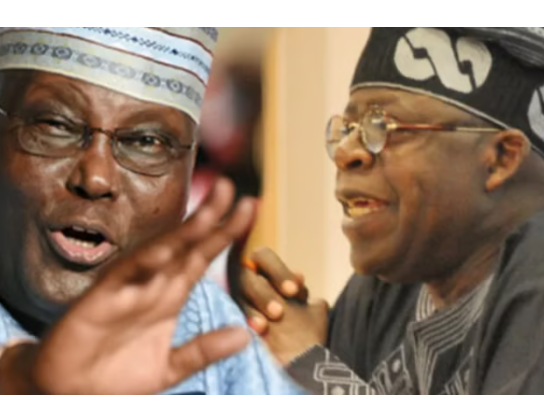
Political Loyalties in Flux: The Shift from Atiku to Tinubu's Camp
Recent developments in Nigerian politics highlight the fluidity of political allegiances, as former spokesmen for Atiku Abubakar transition to support President Bola Tinubu's re-election campaign. This shift raises questions about the nature of political loyalty and public perception in an ever-evolving political landscape.

Ebola Resurfaces: Nigeria Faces New Challenge a Decade After 2014 Triumph
As Nigeria marks a significant anniversary in its public health history, the confirmation of a new Ebola case in Abuja raises urgent questions about the nation's preparedness. The recent incident serves as a critical test of the lessons learned from the 2014 outbreak that was successfully contained.

Kwankwaso Vows to Prioritize Jobs and Security in 2027 Election Campaign Amidst Obi's Absence
Rabiu Kwankwaso has outlined key focus areas for his envisioned Nigeria Democratic Congress (NDC) government, emphasizing the importance of security, education, and agricultural development. This pledge comes as fellow presidential hopeful Peter Obi misses an important meeting in Plateau State.